
Lake Tawakoni Fishing Report-April 2026
Week of April 27, 2026
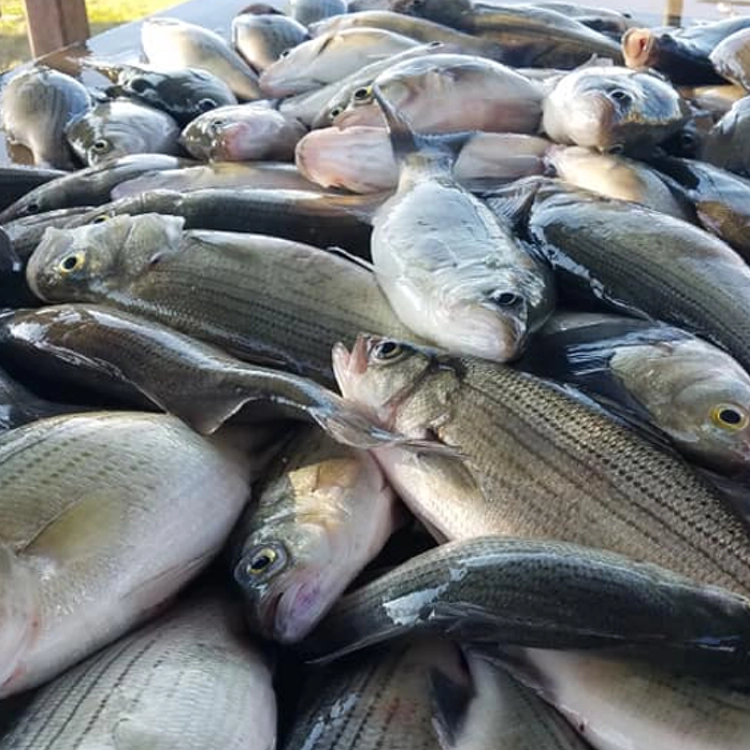
Lake Tawakoni continues to produce excellent spring fishing. On this trip, Cliff’s Guide Service put together a full 4-man limit of white bass, with a few hybrid stripers mixed in. The bite is consistent and aggressive.
Conditions on the Water
Air temperature was 71 degrees with a light south wind at 5–10 mph. Water clarity is good, and the surface temperature is around 70 degrees. Fish are holding in 10–20 feet of water.
What Worked
Vertical jigging 1.5 oz slab spoons in chartreuse and silver continues to be the top producer. Staying directly over schools using electronics and spot lock is key.
Fishing Results
This trip produced a full 4-client limit of white bass with steady action throughout the day. A few hybrid stripers were also caught, adding variety and excitement.
Trip Summary
Lake Tawakoni is in a strong spring pattern. Fish are grouped up, feeding aggressively, and easy to target once located. This bite should continue to improve.
Book a Trip
If you want in on this bite, now is the time.
📞 214-240-7344
🌐 https://tawakonistriper.guide/
Trips are filling fast—lock in your date.
FAQ
What fish are biting right now at Lake Tawakoni?
White bass are the primary species, with consistent limits. Hybrid stripers are also being caught.
What techniques are working best?
Vertical jigging slab spoons, especially 1.5 oz chartreuse and silver, is producing the best results.
What is the water temperature and depth?
Water temperature is around 70 degrees, and fish are holding in 10–20 feet.
Week of April 20, 2026
Lake Tawakoni continues to produce strong action as spring patterns hold steady. Cliff’s Guide Service put together another successful trip, capitalizing on wind-driven fish movement and active feeding behavior. The result was fast-paced fishing and a great mixed bag for clients.
Conditions on the Water
Weather conditions were favorable, with temperatures around 68 degrees and a steady south wind blowing 10–15 mph. Water clarity remained good, and the surface temperature held at 69 degrees. Fish were holding in 10–20 feet of water, where bait was concentrated due to wind-driven currents.
What Worked
The key technique was vertical jigging 1.5 oz slab spoons in chartreuse and silver. Staying directly over schools using the trolling motor allowed for precise presentations. Once fish were located, the action was consistent, with aggressive strikes on the drop and during the retrieve.
Fishing Results
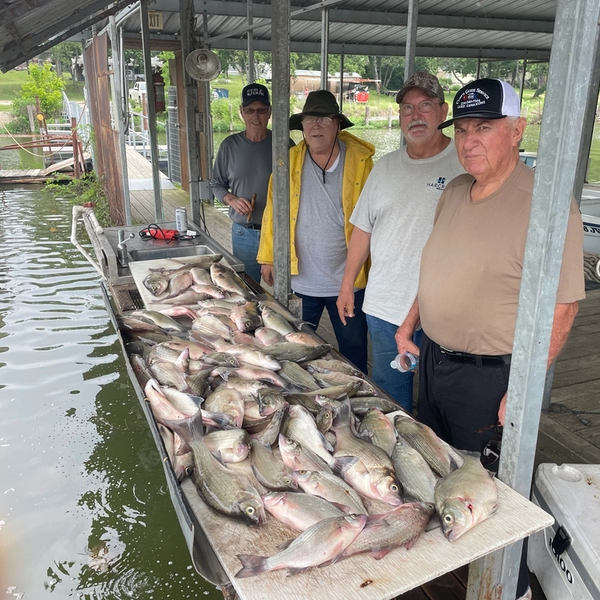
This trip produced a two-man limit of white bass along with 4 quality hybrid stripers. The bite was steady throughout the trip, with multiple hookups and solid fish coming over the rail. The combination of numbers and size made for a highly productive outing.
Trip Summary
Lake Tawakoni is in a strong spring pattern right now. Wind is playing a major role in positioning fish, and anglers who adjust to it are seeing excellent results. Expect this bite to continue as long as bait remains concentrated and water temperatures stay stable.
FAQ
What fish are biting right now at Lake Tawakoni?
White bass are biting extremely well, with consistent limits being caught. Hybrid stripers are also active and showing up in good numbers alongside white bass schools.
What techniques are working best?
Vertical jigging slab spoons—especially 1.5 oz in chartreuse and silver—is producing the best results. Staying on fish with a trolling motor and working schools directly is key.
What is the water temperature and depth?
Surface water temperature is around 69 degrees. Most fish are being caught in 10–20 feet of water where bait is concentrated.
Book a Trip
Ready to get in on this action?
Cliff’s Guide Service
📞 214-240-7344
🌐 https://tawakonistriper.guide/
Week of April 13, 2026
Week Fishing on Lake Tawakoni continues to be strong, with consistent action for both white bass and hybrid striped bass.
Current Conditions
- Weather: Cloudy
- Air Temp: 72°F
- Wind: South 5–10 mph
- Water Clarity: Good
- Surface Temp: 68–70°F
These stable spring conditions are creating ideal feeding windows and keeping fish active throughout the day.
Where the Fish Are
White bass and hybrids are currently holding in the 10–20 foot depth range, staging in open water and along subtle structure changes.
Schools are moving but remain grouped up, making them highly targetable once located.
Productive Techniques
The most effective setups right now include:
- 4” Banana Sassy Shad (3/4 oz jig heads)
- Excellent for covering water and staying in the strike zone
- 1.5 oz Silver Slab Spoons
- Ideal for vertical jigging when fish move deeper
Anglers who adjust between casting swimbaits and vertical jigging are seeing the most success.
Fishing Results
Recent trips are producing:
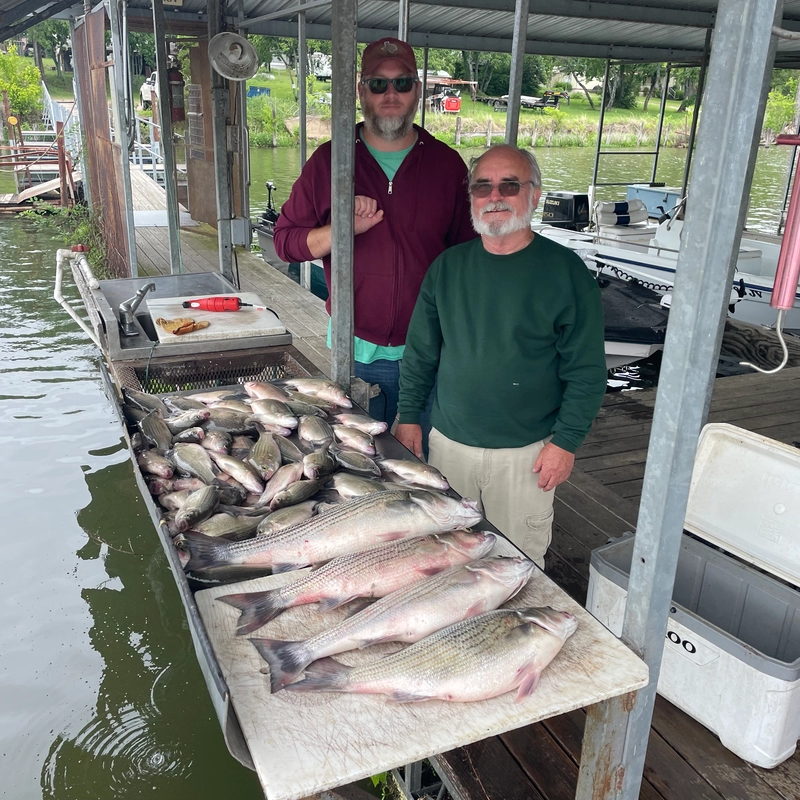
- Full limits of white bass (3-man limits common)
- Bonus hybrid striped bass mixed in
The bite has been consistent, with steady action once fish are located.
Outlook
As water temperatures hold in the upper 60s, expect this pattern to continue. White bass and hybrids will remain active in mid-depth ranges, providing excellent opportunities for both numbers and quality fish.
Book a Trip with Cliff’s Guide Service
If you want to skip the learning curve and get straight to catching fish, a guided trip is the fastest way to do it.
Cliff Thornton runs trips on Lake Tawakoni targeting:
-
Striped bass
-
Hybrid stripers
-
White bass
Trips are adjusted daily based on:
-
Fish movement
-
Weather conditions
-
Seasonal patterns
Call 214-240-7344 to schedule your fishing trip.
Service Areas
Cliff’s Guide Service offers trips on Lake Tawakoni for anglers visiting:
-
Wills Point, TX
-
Emory, TX
-
Canton, TX
-
Edgewood, TX
-
Dallas, TX
-
Fort Worth, TX
Trips are adjusted daily based on fish movement, weather conditions, and seasonal patterns to give you the best chance at success.
Lake Tawakoni Fishing Resources
Plan Your Fishing Trip
-
Lake Tawakoni Fishing Guide – Overview of fishing trips
-
Lake Tawakoni Fishing Trip Pricing – See current rates
-
Book a Fishing Trip – Check availability