

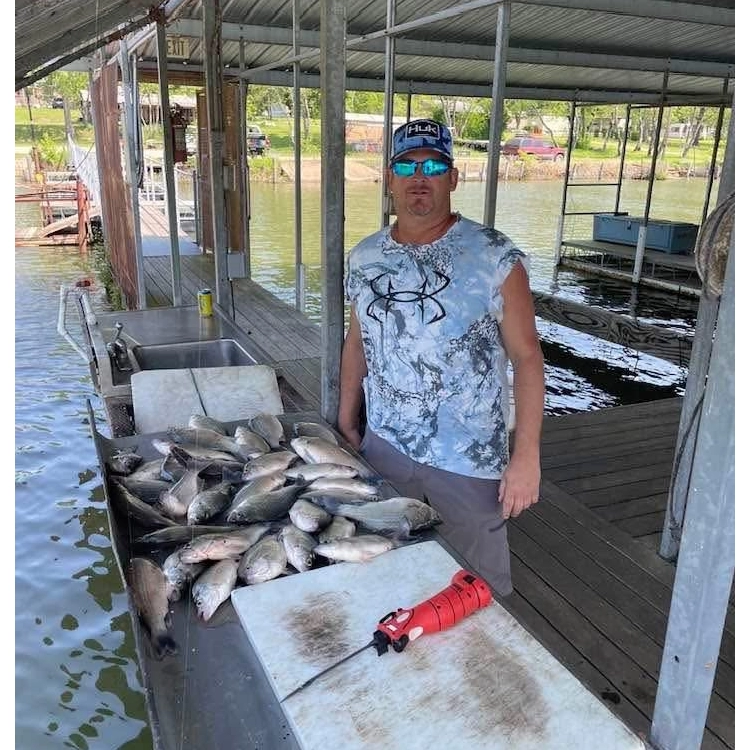
Author: Cliff Thornton
Quick Answer: What is the best way to fish live bait on Lake Tawakoni?
Start with healthy live shad, locate fish, and place the bait near their feeding depth. A controlled drift or stationary presentation can work, depending on fish location and conditions. Boat control and bait condition matter as much as the rig itself.
Why Live Bait Works So Well on Lake Tawakoni
Stripers, hybrids, and white bass feed on baitfish. Live shad offer a natural presentation that can be useful when predators are reluctant to chase lures. Live bait does not guarantee action: you still need to find fish, select an appropriate depth, and keep the bait in good condition.
Target Species Behavior on Lake Tawakoni
Understanding fish behavior is what separates average days from great ones.
Striped Bass
Stripers are open-water predators that roam in schools following bait. They often suspend at mid-depth and move constantly.
Hybrid Stripers
Hybrids are aggressive feeders and tend to stay in tighter schools. They’re known for explosive bites and hard fights.
White Bass (Sand Bass)
White bass are numbers fish. They feed heavily on smaller shad and often push bait to the surface, especially during feeding frenzies.
Key Pattern
Follow bait concentrations, check for nearby fish, and monitor how the school moves. Do not assume every bait ball holds active predators.
Threadfin Shad Breakdown (The #1 Live Bait)
Threadfin shad are the backbone of live bait fishing on Lake Tawakoni.
Why Threadfin Shad Work
- Natural forage for all target species
- Flash and vibration trigger strikes
- Match the size fish are feeding on
Ideal Size
Match bait size to the fish and tackle being used. Smaller bait may be easier for white bass to take, while larger bait requires appropriately sized hooks and equipment. Let observed forage and actual bites guide your choice.
Keeping Shad Alive
Healthy bait is critical:
- Use a round bait tank with aeration
- Keep water cool and oxygenated
- Avoid overcrowding
Check bait condition regularly and replace bait that is no longer swimming well.
Best Live Bait Rig Setups
Rigging is simple, but details matter.
Basic Drift Rig
A basic weighted rig uses a sinker, swivel, leader, and hook. Select weight for depth and drift speed, and match the hook to the bait without burying the point. Inspect knots and leaders. Avoid treating a single weight or hook size as correct for every situation.
Hook Placement Options
Through the Nose
- Best for drifting
- Keeps bait swimming naturally
Behind the Dorsal Fin
- Adds more action
- Good for slower presentations
Why Circle Hooks Matter
Circle hooks are designed to work with steady pressure rather than a sharp, sweeping hookset. Follow the hook manufacturer’s guidance and ask your guide to demonstrate the response. Keep the hook point and gap clear when rigging bait.
Drift Fishing Technique (Step-by-Step)
Drift fishing is the foundation of live bait fishing on Lake Tawakoni.
Step 1: Find Bait and Fish
Use sonar to locate:
- Bait balls
- Suspended fish
- Depth zones
Step 2: Position the Boat
Set up a controlled drift:
- Let wind move the boat
- Use drift socks if needed
- Stay over fish zones
Step 3: Drop Bait to Depth
- Adjust depth based on fish location
- Keep bait just above fish
Step 4: Let the Rod Work
- Don’t jerk immediately
- Let circle hook do its job
- Apply steady pressure
Ask for a demonstration before the first bite so you know how to respond.
When Live Bait Beats Lures
Live bait is an option when you can locate fish but they will not chase an artificial presentation. Keep it near the target depth and check it after missed bites. If results do not improve, reassess location and drift speed rather than assuming fresh bait will solve every problem.
Weather and Water Conditions
Fishing success changes with conditions.
Wind
Account for wind before setting a drift:
- Pushes bait into areas
- Creates feeding opportunities
Sunlight
- Low light = more aggressive feeding
- Bright sun = deeper fish
Water Clarity
- Clear water = lighter line, natural presentation
- In stained water, check bait condition and presentation depth carefully
Seasonal Overview
Use the conditions on the day rather than a fixed calendar. The same rig may need a different weight, depth, or drift speed as wind and fish activity change.
Why Hiring a Fishing Guide Helps
Live bait fishing looks simple, but doing it right takes experience.
A guide helps you:
- Locate bait and fish quickly
- Set proper depth and rigs
- Adjust to changing conditions
- Maximize your time on the water
You can spend more time practicing the technique with help available when questions come up.
Frequently Asked Questions
How deep should I fish live bait?
Use fish marks and observed bites to select a depth. Fish may be suspended well above the bottom.
What weight should I use?
Use enough weight to control the bait at the intended depth. A line trailing far behind the boat may indicate that you need to adjust speed or weight.
How should I care for bait?
Use an appropriate container with reliable aeration, avoid overcrowding, and protect it from excessive heat. Check current bait possession and transport requirements, and never release unused bait.
Can white bass take live shad?
Yes. Select bait and hooks appropriate to the fish and the presentation.
Book a Guided Fishing Trip on Lake Tawakoni
Call 214-240-7344 to discuss fishing with Cliff’s Guide Service. Confirm the intended technique, bait arrangements, and what to bring before your trip.
Plan Your Lake Tawakoni Trip
View fishing trip rates or explore the Lake Tawakoni striper fishing guide.